About The Global DPO Map
Understanding The Terminology
Organisation Of Persons With Disabilities
Disabled People's Organisation
Depending on the country, cultural context, institutional pressures, and language translations, organizations may choose to identify as a DPO or OPD. Both terms refer to organizations working toward the goal of advancing justice and rights for disabled people worldwide, while prioritizing disabled leadership and self-determination. Research for this project indicates that most DPOs and OPDs define themselves identically, even though they call themselves different things.
This project encompasses both DPO- and OPD-identifying organizations, as long as they meet the following definition used by researchers to collect our data:
A Disabled People’s Organization (DPO) or Organization of Persons with Disabilities (OPD) is a civil society/third sector, representative organization that exists for the explicit purpose of advancing justice as it pertains to the disability community and is either:
- Majority-run and -controlled by disabled people, including at leadership/board levels, OR
- Run by supporters of disabled people, if the disabled people in question have access or legal needs that make such support necessary. In this case, self-advocacy and self-determination must be a primary part of the organization.
We understand that cultural preferences, as well as linguistic and translational variations, blur the lines of the English language-centric debate over identity- vs. person-first language, and that many organizations worldwide face pressure to identify themselves in line with United Nations terminology. We welcome discussion and debate on language and terminology, and as the landscape of data/evidence changes, we imagine that this tool will evolve with it.
What is the Global DPO Map?
The Global DPO Map is the largest-ever collection of advocacy groups led by disabled voices in the transnational disability community. It is an open source data collection project, meaning its key goal is to collect information about relevant organizations and make them freely available to the public, particularly DPOs and individual disabled people themselves.
We envision the Map as a living document, intended to make visible the important work of communities of disabled people across the world. This project will never be “finished” or “complete,” as the DPO landscape is constantly evolving. The Map is a work-in-progress – some organizations will have lots of data available about them, while others may only have a name and country for now while we try to gather more information.
On the Map, you’ll find data like contact information, scope of work, and more that can help you learn about and connect with a certain organization. If you’d like to support this important work and help us grow the data and features on the map, please get in touch.
Why was it created?
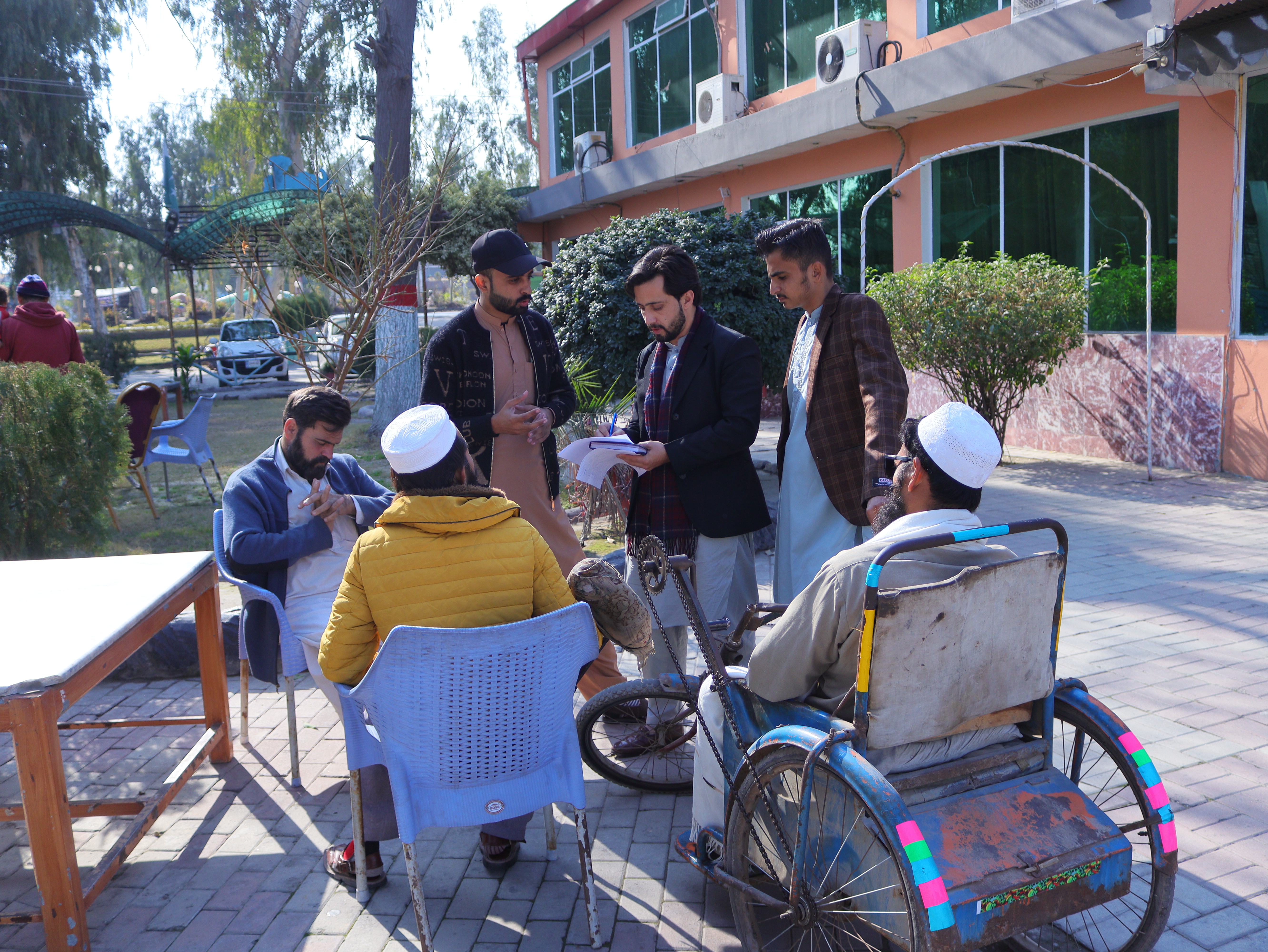 DPOs play a critical role in disability movements worldwide, but often face barriers to networking and cultivating external visibility. Many, especially in low- and middle-income countries, are too busy advocating and providing critical services to maintain an online presence and showcase their work
Our aim for the Global DPO Map is to make it easier for DPOs to find one another and be found by potential partners, members, and funders. We hope the Map will serve as a tool for disabled activists and organizations to connect and share knowledge, as well as for researchers, humanitarian practitioners, and others to cultivate relationships with local DPOs.
The need for this resource, as well as its design, emerged from research with DPOs themselves as part of Anna Landre’s PhD research at the Global Disability Innovation Hub based at University College London (UCL). The research was funded by the AT2030 programme and the Marshall Scholarship. The map itself is delivered by the Global Disability Innovation Hub’s UK International Development funded AT2030 programme which explores what works to improve access to life-changing Assistive Technology (AT) for all.
What's on the map now, and what's next?
 The Map is a work-in-progress and will always be a living, evolving tool. We know we will never collect every DPO in existence, as the landscape of such organizations is always changing. We also know we may make mistakes in how we classify or display organizations due to the lack of data in this area, and we’re always open to new information or corrections.
It is our belief that the Global DPO Map does not have to be complete or perfect to be a useful tool for the community, and research is never finished or unbiased. We will never display private information without consent; all of the information in the map was either intentionally submitted for display by DPOs themselves, or already available as public information elsewhere online (and properly cited).
Over time, and as we gather more funding, we hope to further populate the map with more organizations, especially those representing multi-marginalized disabled people. We also hope to ask DPOs what additional features would best help them in their work, such as networking and capacity-building tools. Over the next months and years, we hope to add more language translations (including Easy Read and sign languages), more organisations and data, a repository to store DPO knowledge, data visualizations about the global organizational landscape, and more.
Can I add my organisation to the map?
If your organization is a DPO, then yes! There are many conflicting definitions of what constitutes such an organization, and for the purpose of this research we surveyed existing definitions and spoke with DPO leaders to create one that was simple and operationalizable (measurable in research).
To be on the Map, your organization must meet the definition shown at the top of this page. If the organization is not led by disabled people, part of civil society / the third sector organization, a representative organization, or if it does not meet other requirements, it is not eligible for being added to the Map. Organizations that frequently don’t meet this criteria include: schools for disabled people, disabled sports teams, businesses run by disabled people, government departments/agencies/councils, charities run by nondisabled people for disabled people, and advocacy organizations led by one disabled person but without other disabled people embedded in the rest of the organization.
All organizations on the map are vetted by researchers. Please let us know if you spot an error.
How to add a DPO to the map:
About the Global Disability Innovation Hub
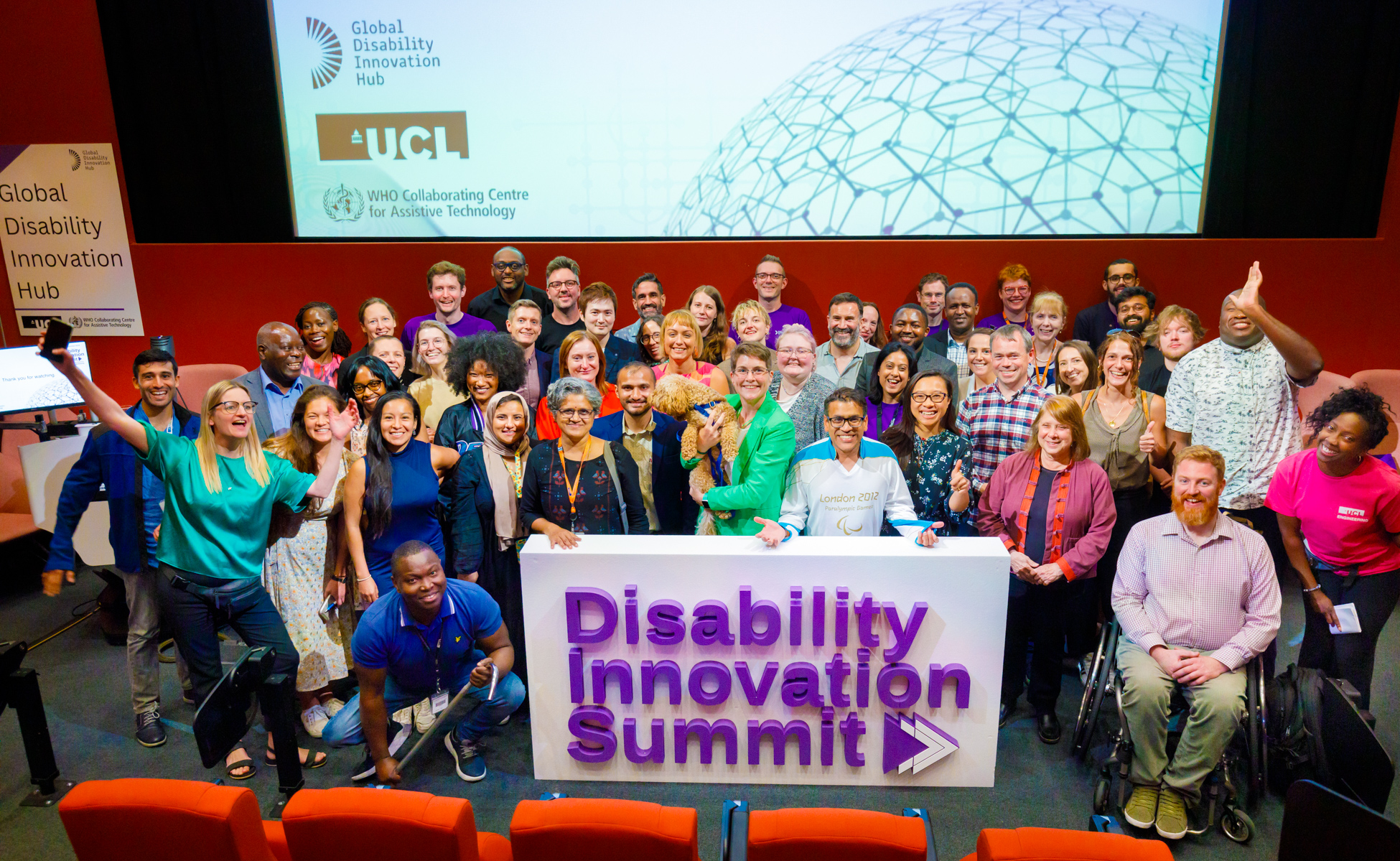
The Global Disability Innovation Hub (GDI Hub) accelerates ideas into impact for a more just world - for disabled people, and all people. As a world leading delivery and practice centre, an Academic Research Centre at UCL (University College London) and the first WHO Global Collaborating Centre on Assistive Technology (AT), GDI Hub develops homegrown technologies alongside new knowledge and research.
Our Methods
For information on data collection and the dataset, please see our Technical Codebook: Coming Soon